Most of our political discourse centres on coalition politics and the relationships between different parties. Our electoral system supports multi-party democracy and the African National Congress’s (ANC) loss of a national majority in 2024 has opened up the space for different parties to contest.
But what happens in the provinces and municipalities where the ANC still holds near-absolute power? Is the party self-correcting and reforming? The experience in North West municipalities over the last nine years suggests that the ANC has learned nothing from its election losses.
Our analysis of local government prioritises the metro municipalities. They have the largest populations, the biggest budgets, and since the 2016 local government election (LGE) at least half of them have had coalition governments. They are important in their own right and they affect inter-party relations at national and provincial level.
Before 2016, the ANC had clear majorities in seven of the eight metros, and the Democratic Alliance (DA) had a majority in Cape Town. After the LGE, coalition governments in Johannesburg, Tshwane, Ekurhuleni and Nelson Mandela Bay created checks and balances that had been sorely lacking.
The DA-led coalitions have been better and cleaner than the ANC-led ones, but not always: the DA’s control of Tshwane from mid-2020 to mid-2024 is stained with poor audit outcomes and accusations of corruption. Is anything better than a clear ANC majority, or is that reductive and prejudiced?
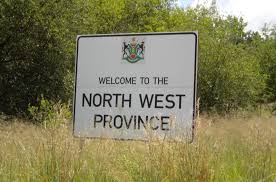
This post leaves the bright (and sometimes broken) city lights for the eponymously named North West province to answer those questions. The province is largely rural, with a population equal to Ekurhuleni’s. Unlike municipalities in Gauteng, Western Cape or KwaZulu-Natal, the ANC has majorities in almost every council in the North West. After the 2016 election, the only municipality without an ANC majority was Rustenberg with an ANC-led coalition. After 2021, the ANC led minority governments in JB Marks, Leekwa-Teemane and Mamusa.
Too many old dogs that refuse to learn new tricks
The problems in local government in the North West go back a long way, seemingly to the start of South Africa’s democratic dispensation. A 2017 article in the Transformation journal refers to the ‘intensity and abstruseness of factionalism within the ANC’ from 1994 onwards, and how the fallout from the Polokwane conference in 2007 exacerbated this.
The political assassinations in the province, most notably of Moss Phakoe in March 2009, were not a new phenomenon, but the ‘see no evil, hear no evil’ approach of ANC top brass might have cemented the culture of impunity around political killings.
An explosive report by the Daily Maverick in 2013 revealed that corruption and maladministration were entrenched across local government in the province. Referencing a report by the Special Investigating Unit (SIU), the article confirmed that every local and district municipality in the province had been exposed for severe governance breaches.
You would think that, from this point, local governance had nowhere to go but up. Sadly, without any external challenges to ANC misrule after the 2016 LGE results, the party continued to tear itself apart from within, leaving residents and local businesses to deal with the fallout.
It is hard to draw up an exact timeline from 2016 of failing municipalities being placed under administration. The Department of Cooperative Governance and Traditional Affairs (Cogta) released a report in May 2020 confirming that at least 14 municipalities in the province had been under administration in the previous financial year, the highest number of any province. Some of these, like Mahikeng, had been under administration an additional two or three times in the previous fifteen years.
Minutes from a Cooperative Governance and Public Administration committee meeting in September 2020 confirm that 13 municipalities were then under administration. The meeting was postponed as a progress report was only submitted an hour before the meeting and most municipal representatives were absent. Several MPs expressed concern at this brazen flouting of Constitutional obligations.
A post on the Cogta website in March 2022 confirmed that seven local municipalities and a district in North West had again been placed under administration in January 2022, just two months after the 2021 LGE. The province again had the dubious honour of the most municipalities under administration at the time.
A recent report from the Parliamentary Budget Office showed that the North West again had the highest number of municipalities under administration between the 2020/21 and 2022/23 financial years – including the first two years of the current local government cycle. Furthermore, every municipality under administration demonstrated a ‘lack of commitment’ to implementing any recommended changes. This echoed the findings of the Cogta report in May 2020, of municipal officials actively thwarting the work of administrators. In JB Marks, the administrator was only allowed into the municipal offices three and half months after the start of the administration period.
Is this the future for the ANC?
With recent polls showing that the ANC has fallen even further in the public’s estimation, there is a good chance that the party will win less than 30% in Gauteng and under 20% in KwaZulu-Natal and the Western Cape. The ANC’s urban base could collapse outside of Buffalo City and Mangaung, the smallest two metros, leaving it to defend its rural strongholds in the North West, Mpumalanga, Limpopo, and the Eastern Cape.
Paradoxically, the internal fighting in the party will intensify as the spoils shrink. The ANC appears incapable of self-correction or renewal and it will devote more time to these internecine skirmishes that will further drain the party of any momentum. The wasted communities of Rustenberg, Mahikeng, Klerksdorp and Brits will continue to hope for change.